

Practical guides
Step-by-step workflows, reusable briefs, and agent guardrails
Multi-Agent Team Mode, Model Cost Routing & Long-Project Governance
Configure Explorer, Executor, Reviewer, and Advisor roles across 1:20:100 model cost tiers, combining pre-coding Explore, pre-commit Simplify, and Git worktree isolation.
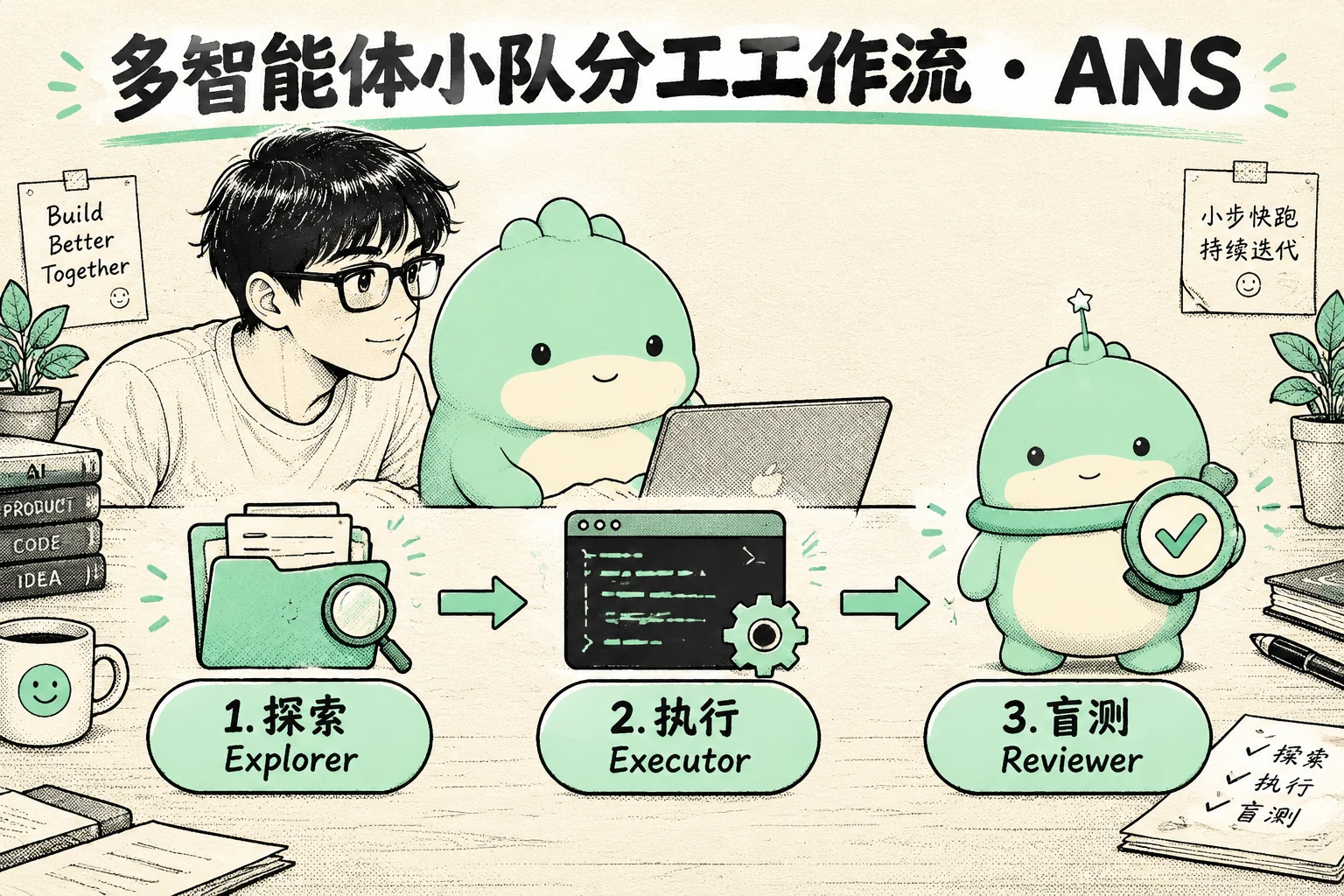
Run this cross-module change with the multi-agent team workflow: 1) send an Explorer to locate relevant components, contracts, and tests and return a compact summary; 2) state explicit boundary rules and target files before implementing; 3) before committing, spawn a context-free Reviewer sub-agent to strip duplicate derived state, over-defensive branches, leftover migration code, and exposed internal UI fields, then run tests and summarize the Git diff.
Without explicit role configs, sub-agents inherit the expensive main model. Route Explorer and bounded Executor tasks to cost-effective high-reasoning models (with explicit rule/file handoffs from the main agent), and reserve top-tier models for an on-demand Advisor.
- Explorer (fast lightweight): maps files and call chains, returning only compact summaries to the main window
- Executor (high-reasoning lightweight): implements bounded edits with explicit rule and file paths
- Reviewer & Advisor (mid/top tier): runs pre-commit simplification, invoking top-tier advisors only on hard deadlocks
What to keepOver 90% of routine search and bounded coding runs on low-cost tiers while reserving top-tier budget for hard architecture.
Before coding across directories, send an Explorer to return a compact path summary so raw source files do not flood the main window; before committing, spawn a fresh Reviewer to strip stacked defensive checks, duplicate state, and dead code.
What to keepMain conversation context stays lean and committed diffs are free of redundant guards or reinvented utilities.
New chat sessions forget prior dialogue, so the repository itself acts as long-term memory. Keep AGENTS.md under a hundred lines as an index pointing to architecture contracts, verification scripts, and retrospectives.
What to keepAny new thread aligns with project conventions immediately without manual copy-pasting.
Isolate concurrent features in separate Git branches or worktrees; before merging, run typecheck and tests and produce a visual diff summary highlighting modified boundaries and human review points.
What to keepParallel tasks never clobber each other, and every merge includes a clear diff boundary and passing test log.