

Practical guides
Step-by-step workflows, reusable briefs, and agent guardrails
Understand an Open-Source Repo and Make It Your Own Experiment
Move from cloning and running to inspecting diffs and making small commits, turning open-source code into safe learning material.
Do not edit any code yet. Read the README and directory structure, then tell me: 1) where the entry file is; 2) which commands start and test the project locally; 3) the minimum files to touch if I only want to replace sample data and homepage copy.
Record install commands, Node or Python versions, environment variables, and ports. Do not ask AI for broad code edits before the baseline runs.
What to keepYou can see the original homepage, CLI output, or test result locally.
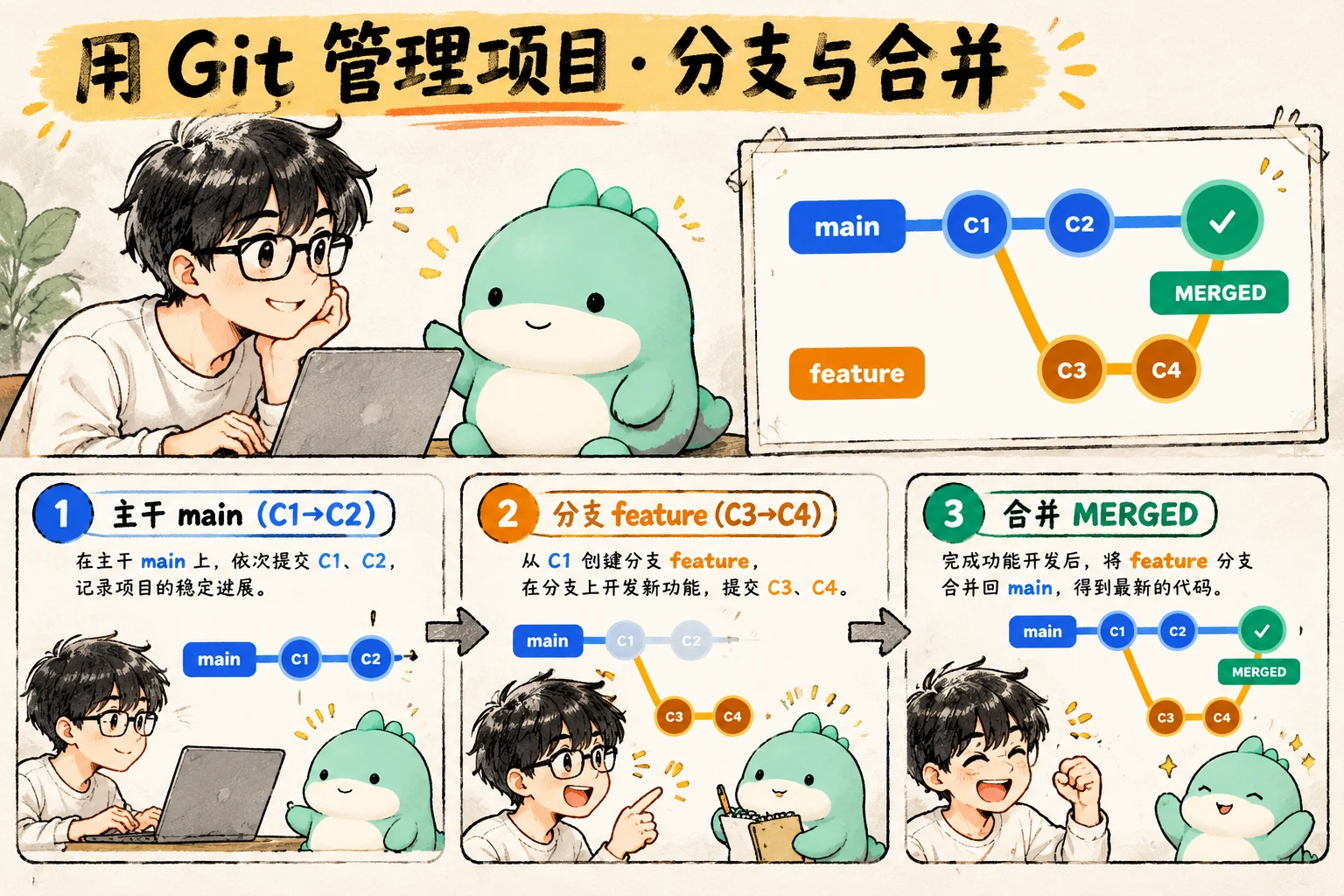
Create a named branch for your experiment and change one page, data source, or interaction at a time so it stays easy to compare and revert.
- Confirm .env, secrets, and large temp files are ignored by .gitignore
- Keep each commit focused on one clear intent for easy rollback
- Run the project's lint, typecheck, or minimal test suite
What to keepYou can run Git Diff at any time and explain every changed file.
Run the project's build, typecheck, or smoke test; if the repo has no tests, write down the manual verification steps.
What to keepBefore-and-after behavior is backed by screenshots, command output, or tests.
State the upstream repository, license, your additions, and reproduction steps in the README or submission notes.
What to keepReviewers or teammates can immediately separate the upstream base from your contribution.